
Updated:
Performance Meets Poetry: Upholstery That Survives Sun, Kids and Time
For readers assessing performance upholstery fabric, the practical question is how the idea performs in a real room, not only how it photographs. Heimtextil ran from 13 to 16 January 2026 in Frankfurt and closed with about 3,000 exhibitors, 148 participating nations and more than 48,000 buyers. The organiser’s closing report named functional textiles a growth area across hospitality, contract, office and healthcare. On the stands, one word did most of the work: performance. It sits on hangtags beside poetry, softness and hand. Unlike poetry, performance is measured, and almost none of the numbers mean what the marketing suggests.
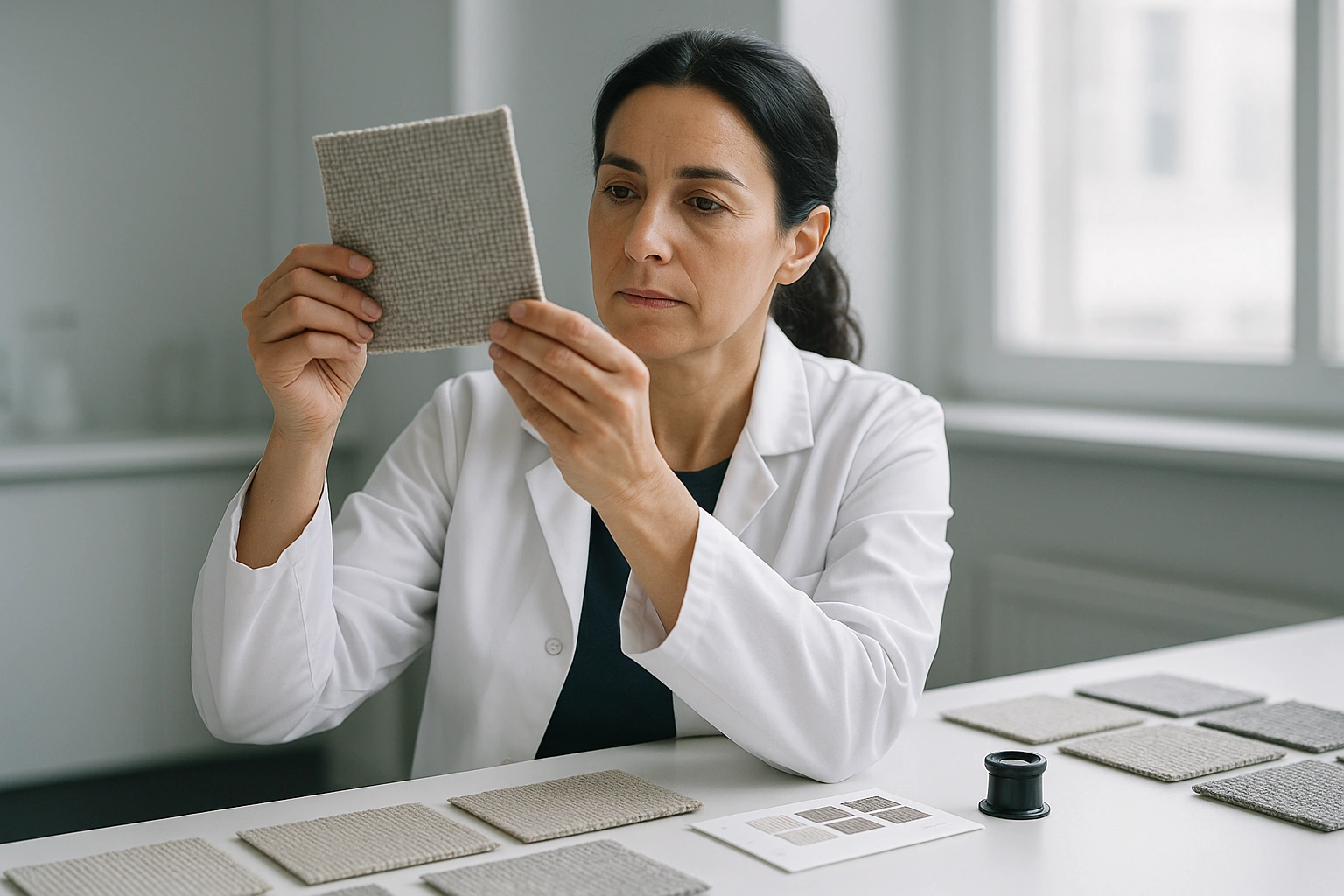
Two abrasion tests, two numbers, no exchange rate
Abrasion resistance is the headline figure on almost every upholstery spec sheet. It comes from one of two machines that do not agree.
The Martindale method, EN ISO 12947 in Europe and ASTM D4966 in the ASTM system, rubs a clamped round specimen against a wool abradant while the head traces a Lissajous figure, a circle that flattens into an ellipse and then a straight line. The changing direction wears warp and weft at a similar rate. The result is a cycle count at breakdown. Wyzenbeek, ASTM D4157, is simpler and more brutal: it drags cotton duck or wire mesh back and forth along one axis and reports double rubs.
Different motion, different abradant, different unit. This is why the most repeated claim about upholstery is false: there is no conversion. The Association for Contract Textiles, whose voluntary guidelines most specifiers quote, says it flatly in its abrasion guideline. There is no correlation between Wyzenbeek and Martindale results. If a supplier converts a Martindale figure into double rubs for you, they have invented the number.
| Martindale | Wyzenbeek | |
|---|---|---|
| Method | EN ISO 12947 / ASTM D4966 | ASTM D4157 |
| Motion | Lissajous figure, multi-directional | Straight line, back and forth |
| Abradant | Standard wool fabric | #10 cotton duck (ACT approved) or wire mesh |
| Unit reported | Cycles | Double rubs |
| ACT low traffic, indoor | 20,000 cycles (12 kPa) | 15,000 double rubs |
| ACT high traffic, indoor | 40,000 cycles (12 kPa) | 30,000 double rubs |
The numbers also deserve less respect than they get, and ACT is blunt about why in its abrasion disclaimer. Its 2009 Wyzenbeek verification study observed results on the same fabric varying by at least 60 per cent from test to test. Both methods measure flat abrasion and ignore edge abrasion, where a cushion fails first. Results above the high-traffic guideline have not been shown to indicate increased lifespan. The wider project context is available from thelight-house.net.
Abrasion figures are a pass mark, not a score. Once a fabric clears the threshold for its use, a bigger number buys reassurance, not years.
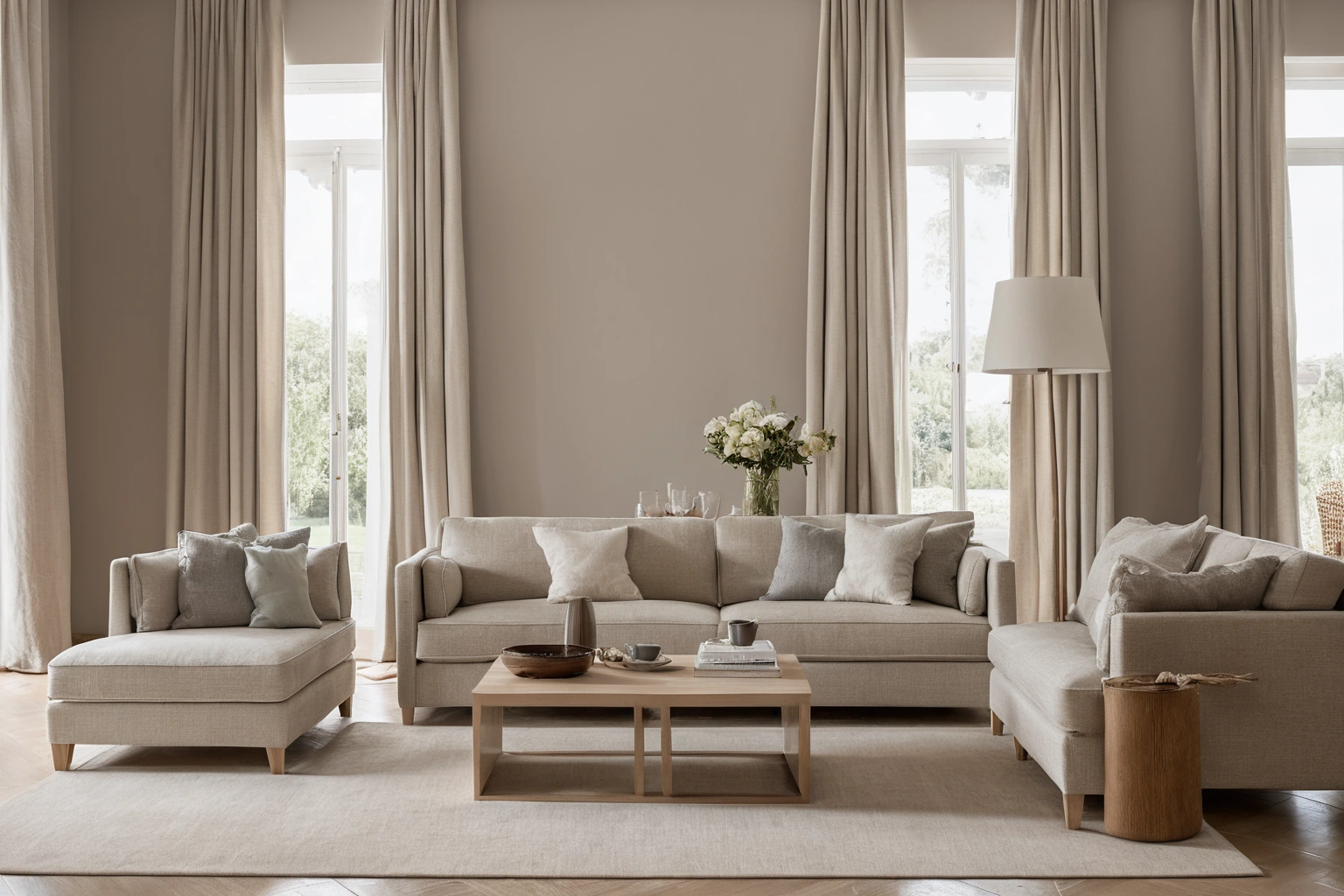
Light is the quieter enemy
A sofa is rarely rubbed to death. It is more often retired because one end no longer matches the other. Near a window, colourfastness to light decides how it ages.
The European reference is the blue wool scale, a card of eight dyed wool standards numbered 1 to 8. Under ISO 105-B02 a sample is exposed to xenon arc light alongside them, and its rating is the number of the blue wool that faded to the same degree. The steps are not linear: each takes roughly twice the exposure of the one below, so 5 to 7 is a longer way than it looks.
Here the vocabulary traps people. North American specifications also quote a grade, and it is a different grade on a different scale. ACT asks for grade 4 minimum at 40 hours under AATCC 16.2 Option 1 or 16.3 Option 3, and that 4 is read off the AATCC Gray Scale for Color Change, which runs 1 to 5, where 5 means no visible change. It is not blue wool 4. Two scales, one word. Further related coverage is collected in Blog.
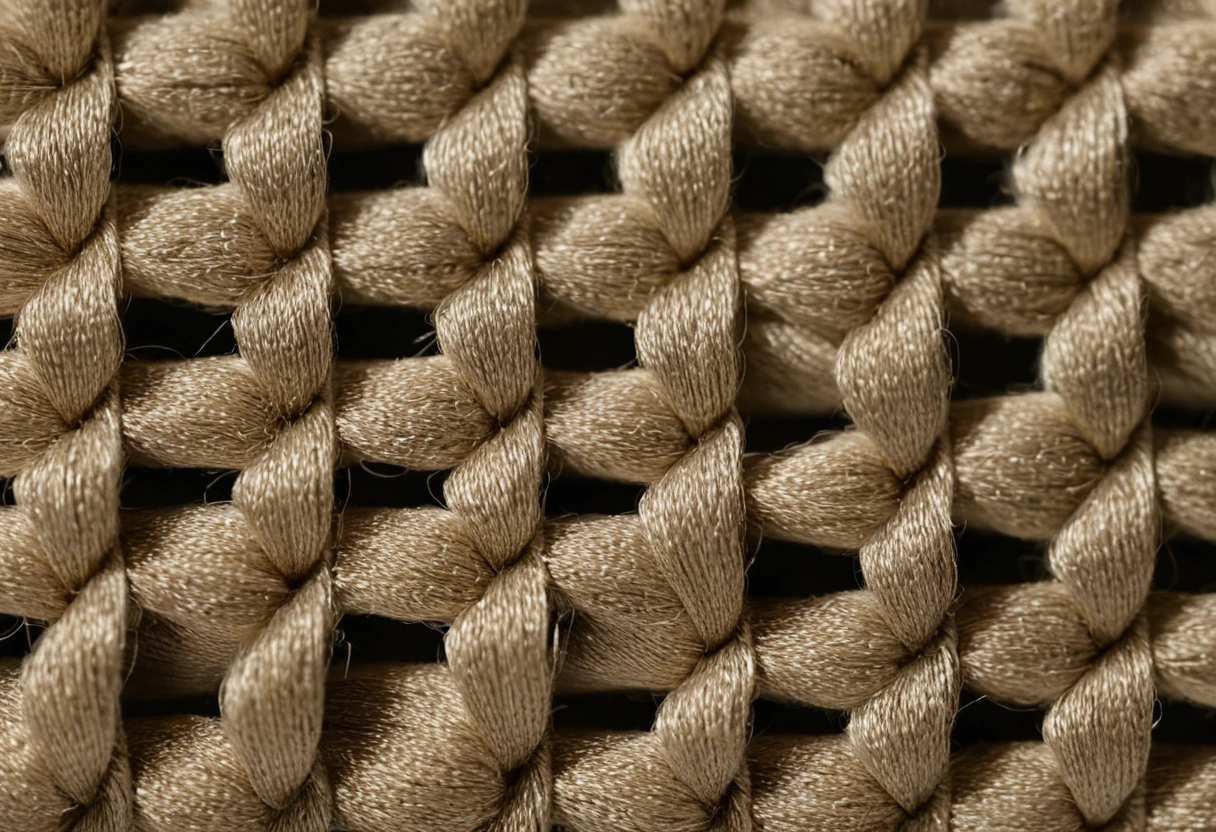
Where the colour lives
Fade resistance is mostly decided before the fabric exists, by when the colour goes in. Piece-dyeing colours the cloth after weaving; it is how most interior fabric is made, and the dye concentrates near the surface of the fibre. Solution-dyeing works the other way. Pigment is mixed into the liquid polymer before extrusion through the spinneret, so colour runs through the filament rather than sitting on it. In acrylic, which already resists UV well, that is why solution-dyed acrylic dominates awnings and terrace seating. Abrade the yarn and the colour underneath is the same colour. The tradeoff is shorter ranges and longer lead times.
Rubbing off, and the letter on the tag
Two additional tests matter, yet almost nobody asks about them. Colourfastness to crocking, AATCC 8, measures colour transfer by dragging a white cloth across the fabric first dry and then wet, with results graded from 1 to 5, where 5 is none. The test predicts whether a deep indigo sofa will mark white trousers, and wet crocking usually grades lower than dry. Our sourcing process explains how the magazine verifies technical claims before publication.
Then there is the cleaning code, one letter governing everything you may do after a spill. Further examples and planning context appear in About Us.
- W
- Water-based cleaners only. The forgiving code, worth insisting on in a house with children.
- S
- Solvent only. No water, no steam. Usually a professional call-out.
- W/S
- Either water-based or solvent. The most practical code for family use.
- X
- Vacuum or brush only. No liquid of any kind. Beautiful, and structurally incompatible with a four-year-old.
A fabric with a five-figure abrasion number and an X code is not a performance fabric in any sense a household would recognise.
The sustainability claims, read honestly
Performance and sustainability share the hangtag now, and the second word is far less regulated. Recycled content is the usual claim, generally polyester from drinks bottles. The chemistry is real, but the loop is not closed: bottle-derived fibre moves PET out of bottle-to-bottle recycling into a product that will almost certainly never be recycled again. Bottle-to-sofa is a delay, not a circle.
Where a claim can be checked, check it. The Global Recycled Standard certifies from 20 per cent recycled content, but a product needs at least 50 per cent to carry the consumer-facing GRS label. Directive (EU) 2024/825 on empowering consumers for the green transition had to be transposed by 27 March 2026 and applies from 27 September 2026. From that date, generic claims such as eco-friendly or climate neutral are prohibited unless the trader can demonstrate recognised excellent environmental performance, offset-based neutrality claims are out, and sustainability labels not based on a certification scheme or set by a public authority may not be used. An unqualified “eco” on a European swatch book this autumn is a compliance problem. The publication’s sourcing and review approach is explained in Editorial Guidelines.
What to ask before you commit
The questions that protect a long-lived piece are dull and answerable. A mill that publishes proper technical data for its Italian upholstery fabric collections will have all of it on the swatch card already.
- Which machine produced that number? A figure with no method attached is decoration.
- What is the lightfastness rating, and on which scale? Near direct sun, this outranks abrasion.
- What are the dry and wet crocking grades? Ask for wet on dark colours.
- Solution-dyed or piece-dyed? It tells you what happens as the surface wears.
- What is the cleaning code? W or W/S for family rooms; treat X as decorative.
- Recycled content: what percentage, under which certification?
None of this is hostile to beauty. The poetry in a fabric is real, and it lives in the hand, the light on the surface and the way a colour sits in a room. But it survives only if the technical floor holds, and that floor is about six numbers, all of them public. The mills that have done the work hand them over without a pause. The ones selling the word offer a conversion table instead.